

When Red Bull arrived at Elland Road and almost immediately emblazoned their logo across the front of Leeds United’s shirt, supporters wondered what the 49ers had signed up for.
Red Bull are a content production machine as much as they are an energy drinks company these days and their presence in football is about advertising both elements of the business.
But their strategy isn’t just based on marketing these days. Football is big business and it appears as though they want a return on their investment paid out in cold, hard capital, not just exposure.

That would explain why they bought an as yet unspecified minority stake in Leeds United when they could have simply paid for the controversial front-of-shirt deal by itself.
It is also why the Austrian company have bought a stake in Paris FC alongside Bernard Aurnault, one of the world’s richest men. Presumably, they will one day flip their equity in both clubs for a profit.

For that to happen at Leeds, several things need to happen.
Obviously, Daniel Farke’s side securing promotion from the Championship is the big one.
Leeds’ enterprise value would skyrocket overnight and, if they wanted to and there is a market for a minority equity stake, Red Bull would be quids in.
Enterprise value is also defined by broader business performance as a business and their assets. For Leeds, their biggest asset and opportunity is Elland Road itself.

49ers Enterprises are prepared to spend £200m to expand the stadium and take capacity to around 53,000.
That would make Elland Road one of the biggest stadiums in the country, in turn super-sizing their matchday and commercial income virtually overnight.
In the PSR era, that would be a game-changer for Leeds, who have experienced some issues with EFL spending rules.
Leeds United to target corporate sector with Elland Road rebuild
As part of the takeover from Andrea Radrizzani, the 49ers have already committed £10m just to prepare for the stadium expansion, with most of that going towards a feasibility study.
Now, having officially reacquired the rights to Elland Road, Liverpool University football finance lecturer Kieran Maguire thinks Leeds will target the lucrative hospitality sector with revamp.
“Leeds as a city is a finance hub,” the Price of Football author explains.
“Therefore, it has a lot finance related business and financial big hitters there. That means they have the ability to sell a lot of corporate hospitality deals at an expanded Elland Road.
“Clearly, fans are always going to be concerned about the price of tickets and that is a concern with a hospitality focus.

“For clubs that have a historic base in areas with a lack of affluence, thy have to be very careful not to price the core fanbase out of being able to buy tickets.
“For all of the criticism at West Ham, when they moved to the London Stadium, the season tickets were reasonable and they are still substantially lower than the other big London clubs.
“Elland Road needs a refresh in terms of its ability to generate money from tickets and the commercial sector. A new stadium is one way of achieving that.”
Will stadium expansion make Leeds a Premier League force?
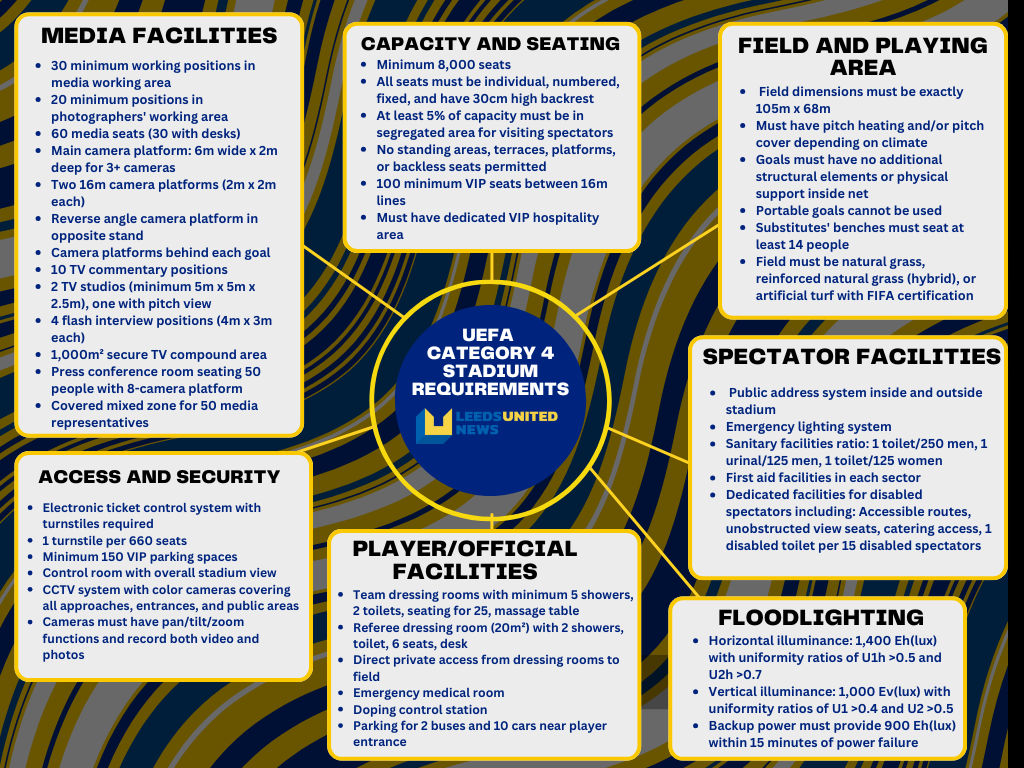
If Leeds achieve UEFA Category 4 status at Elland Road as they have pledged to do, it will make the revamp extraordinarily lucrative.
With the Premier League’s PSR system set to change from next season to a model that is centred on spending as a proportion of revenue as opposed to profit, that will be huge for Leeds’ footballing future.
Matchday income would spike, of course, but the commercial benefits of a revitalised stadium would be enormous too.

For example, Tottenham have trebled their matchday income and sponsorship income in their new stadium since 2019, and the Whites would hope to achieve something similar.
And while it wouldn’t automatically propel Leeds to the status of challenging the Premier League’s so-called Big Six, it would surely have significant impact over time.
Receive a digest of our best Leeds content each week direct to your mailbox