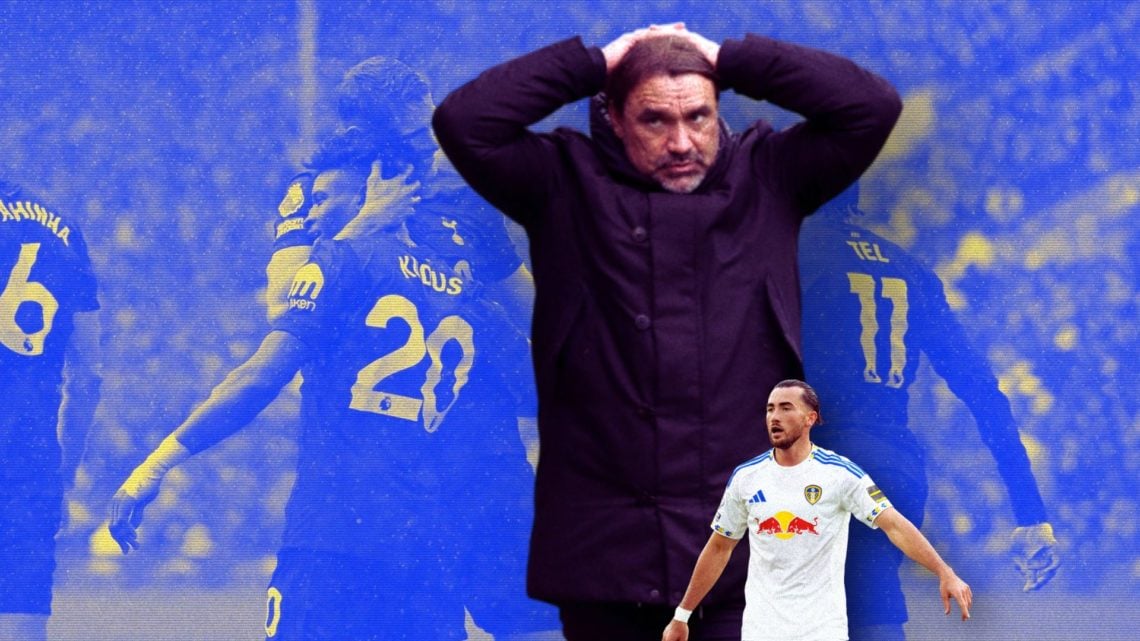


Leeds United slipped to yet another spirited Premier League defeat on Saturday, in what is quickly becoming the narrative of their season.
It’s been a promising start to the Premier League campaign, with Leeds United proving they are more than capable of competing at the highest level and giving any side (except Arsenal) a good game.
That’s just what they did on Saturday, battling hard against Archie Gray’s Tottenham Hotspur, putting in a commendable display, but still losing.
Spurs went ahead after a bright start from Leeds, with Mathys Tel’s shot flying in via Pascal Struijk’s deflection.
But Daniel Farke’s side, as they have done in their last two games, came back from behind to level through the impressive Noah Okafor’s close-range finish.
Leeds were combative and physical, rattling the visitors, but ultimately succumbed when Mohammed Kudus capitalised on a Gabriel Gudmundsson error to find the bottom corner.
Leeds didn’t offer much after that and Farke must take a portion of the blame for his poor substitutions, an area of his management that urgently needs to improve.
- Leeds United Premier League 2025-26 stats – Top goal scorers, assists and results
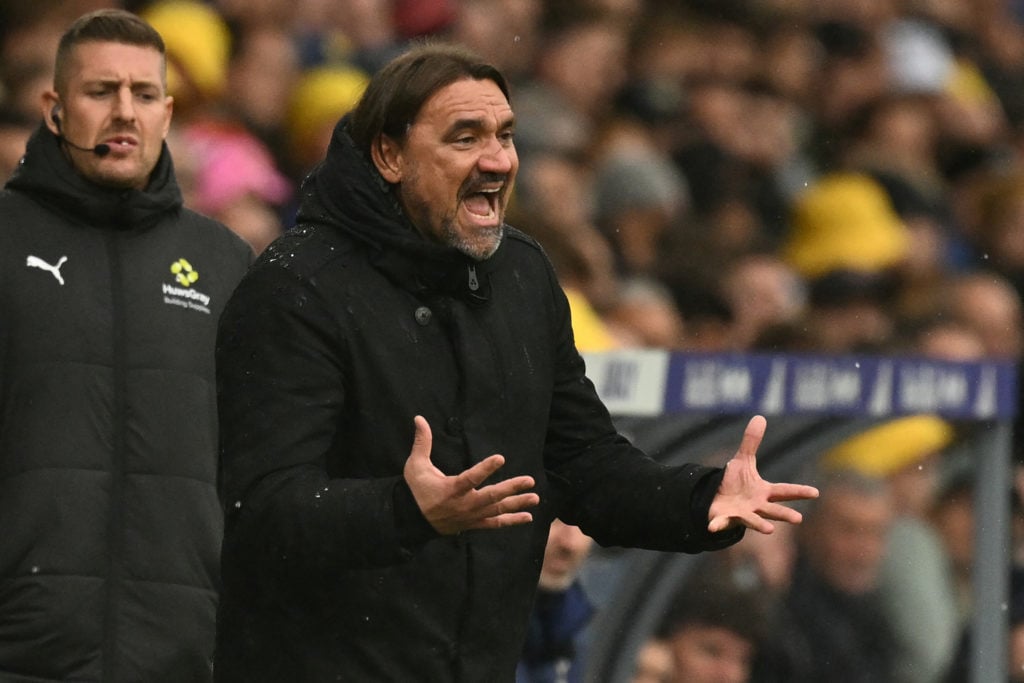
Daniel Farke made five baffling changes in Leeds United’s defeat to Tottenham
Leeds lost their mojo after slipping behind and only really created two good chances in the final 30 minutes.
Though the goal deflated the side, Farke’s substitutes popped the balloon completely.
His first gambits were Jack Harrison and Ao Tanaka.
Though Tanaka did inject some brief urgency, he was brought on for Anton Stach, who had been at the heart of Leeds’ creative output and leading the pressing charge. Leeds missed him in the middle.
Harrison, meanwhile, once again made little impact and he replaced Brenden Aaronson, who was actually playing well.
Harrison likely wouldn’t be relied upon if Dan James and Willy Gnonto weren’t injured, leaving Leeds light on attacking options, but the winger has offered nothing in an attacking sense all season. Throwing him on when Leeds are chasing a game is completely counterintuitive.
Later on came Lukas Nmecha and Joel Piroe. While throwing on two strikers is understandable, taking off Okafor, who had been Leeds’ biggest threat, rather than Dominic Calvert-Lewin, was baffling in the moment.
Though Farke did explain afterwards that Okafor was unable to play the full 90 minutes.
That left Leeds with three slow strikers at the top end of the pitch but no way to consistently get them the ball without attacking outlets like Okafor, Stach and Gudmundsson, who had also made way.
Okafor had delivered several dangerous crosses in the match already, while Calvert-Lewin had once again squandered several fantastic chances.
Harrison, a notoriously poor crosser, was the only winger on the field and he was moved to wing-back in a formation change. Shortly afterwards, the only good outlet left on the field, Jayden Bogle, was taken off, too.
There might not be a lot of options available to Farke, but he didn’t use any of them well on Saturday.
Daniel Farke must improve his substitutions in the Premier League
Injuries have severely limited Farke’s attacking arsenal in recent weeks, with Harry Gray joining James and Gnonto on the sidelines on Saturday.
Yet, it wasn’t who Farke brought on against Tottenham that was the main problem, but rather who he took off.
Stach and Okafor had been Leeds’ best players, while Calvert-Lewin and Ethan Ampadu had both had poor games.
All of Leeds’ momentum was gone after the changes and, notably, the team did not have one spell of intense pressure on the Spurs goal from open play afterwards.
Piroe did get one good chance away, which led to a string of corners, but Leeds were unable to really trouble a fragile defence.
Farke has done well so far and is earning the trust 49ers showed by keeping him at the helm in the summer, but his in-game management and substitutions need to be sharper if Leeds are to turn commendable performances into precious victories.
Receive a digest of our best Leeds content each week direct to your mailbox