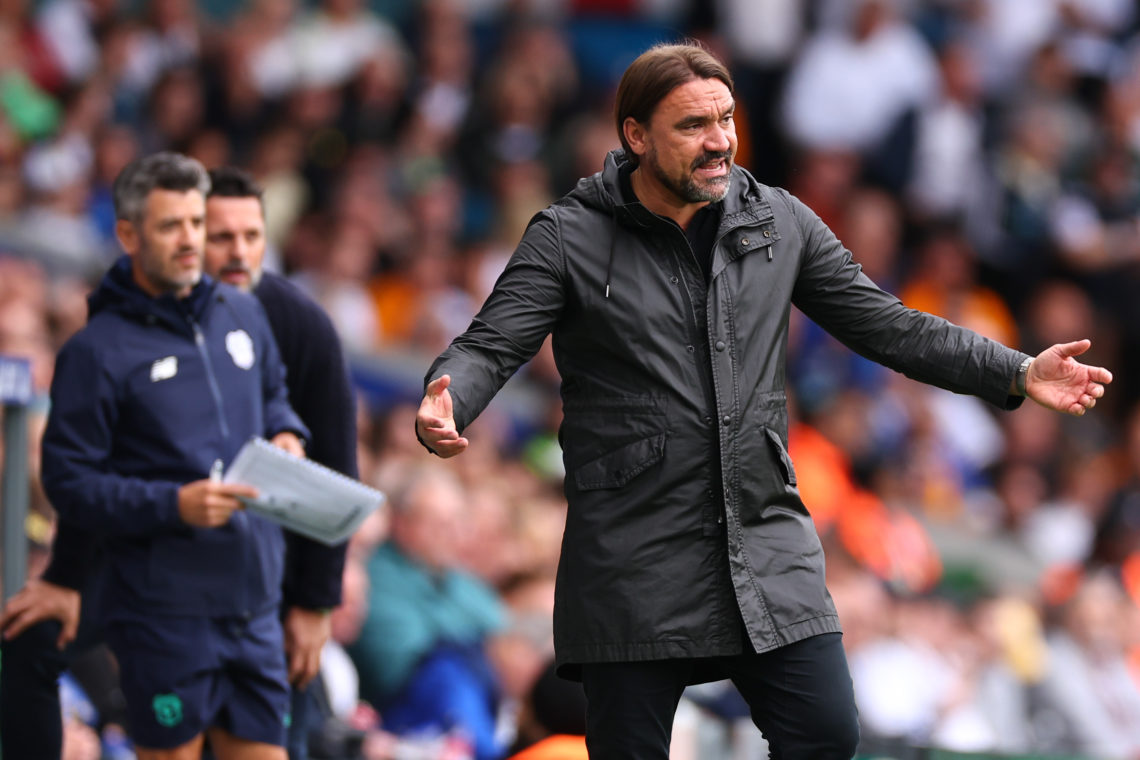


Signing players is just one way in which Leeds United can look to survive relegation, but Daniel Farke will also have a huge say.
Having secured 190 points over the last two seasons with the club, Daniel Farke has plenty of credit in the bank at Leeds United heading into the Premier League.
| Daniel Farke’s Premier League managerial record |
| Games – 49 |
| Wins – 6 |
| Draws – 8 |
| Losses – 35 |
| Points earned – 26 |
| Goals scored to conceded ratio – 31:101 |
However, many Leeds fans will be concerned when viewing Farke’s Premier League record at Norwich City. Leeds are on track to spend more than those teams, though, which should give them more of a chance.
Survival will be tough and Leeds are having to prioritise Premier League physicality via having superior size, athleticism, and energy off the ball; each signing so far has at least two of those attributes, too.
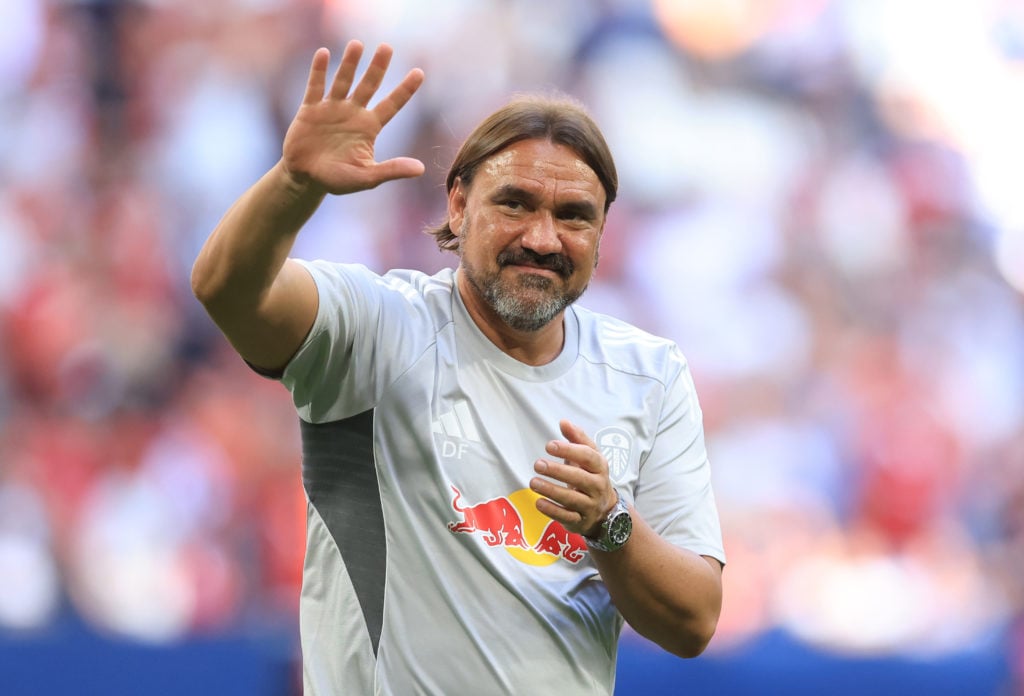
Daniel Farke explains tactical shift for 2025/26 and greater ‘flexibility’
There will also be more of an onus on Leeds using set-pieces this season. Above all, though, they are intent on ensuring they are building a Premier League-ready Leeds team with experience.
Leeds’ Premier League team is already significantly taller than last season’s in the Championship. However, it will take more than that next year.
That means an increased flexibility from a tactical perspective, with more adaptability required both in-game but also game-to-game as well.
Farke has hinted as much in his recent interview. After setting up in a 4-3-3 against Manchester United, Leeds reverted to the trusted 4-2-3-1 they opted for during most of last season against SC Verl.
Speaking via the Daily Mail, he said: “We are flexible and want to be flexible. I’m not addicted to base formations. I’m more addicted to principles.”
“There are different challenges and games where we don’t expect too much possession. When you travel to Man City or to Arsenal or Liverpool, those games will be different to the games against the promoted sides so we need different options.
“Last season, we played in a very similar base formation because we were winning games, and when you’re winning, you don’t want to disturb. I expect more challenges next season where we have to mirror the opponent more, so it’s important to prepare for that.”
They report that, on numerous occasions, he kept shouting ‘distance’ to Ilia Gruev and Sean Longstaff, implying that he wanted his two midfielders at the base of midfield to be closer to one another and to form a regular double-pivot.
Ultimately, this clash against lower-league opposition should be an early indicator of how Leeds may set up in games where they expect more of the ball in 2025/26.
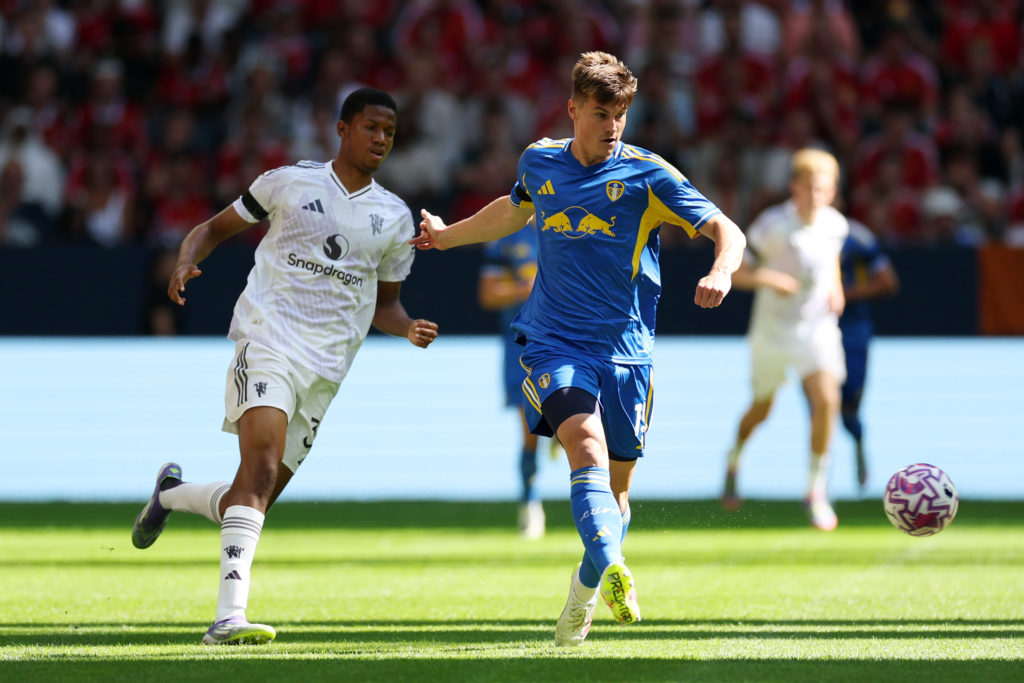
Farke’s versatile Leeds squad now compared to 2023/24 and 2024/25
Last season, Farke utilised the 4-2-3-1 in every single fixture from the start of the game. The year prior, there were just four occasions where Leeds weren’t an out-and-out 4-2-3-1.
It’s a remarkable lack of flexibility in that sense, and talk of a tactical shift shows Farke is not as stubborn as many first thought. Leeds also have the ability to play a back five in some situations, too.
Jaka Bijol has operated in a back three/five a number of times for club and country, as has Gabriel Gudmundsson. The Swede and Jayden Bogle could be flying wing-backs with three central defenders.
We expect that Leeds may flit between a 4-2-3-1, 4-3-3, and 3-4-3 at times next season, based on the way they have recruited for greater versatility with the new personnel — as shown by the versatile Anton Stach’s arrival to Leeds.
The only time Farke changed things was mid-game, often throwing on numerous attackers to play a team with something like a 3-1-6. It was a panicked idea that sometimes paid off.
A back three is certainly something to be considered, and although Farke hasn’t utilised it in a professional setting, Farke did experiment last summer in pre-season; Leeds will need that again this year.
Receive a digest of our best Leeds content each week direct to your mailbox