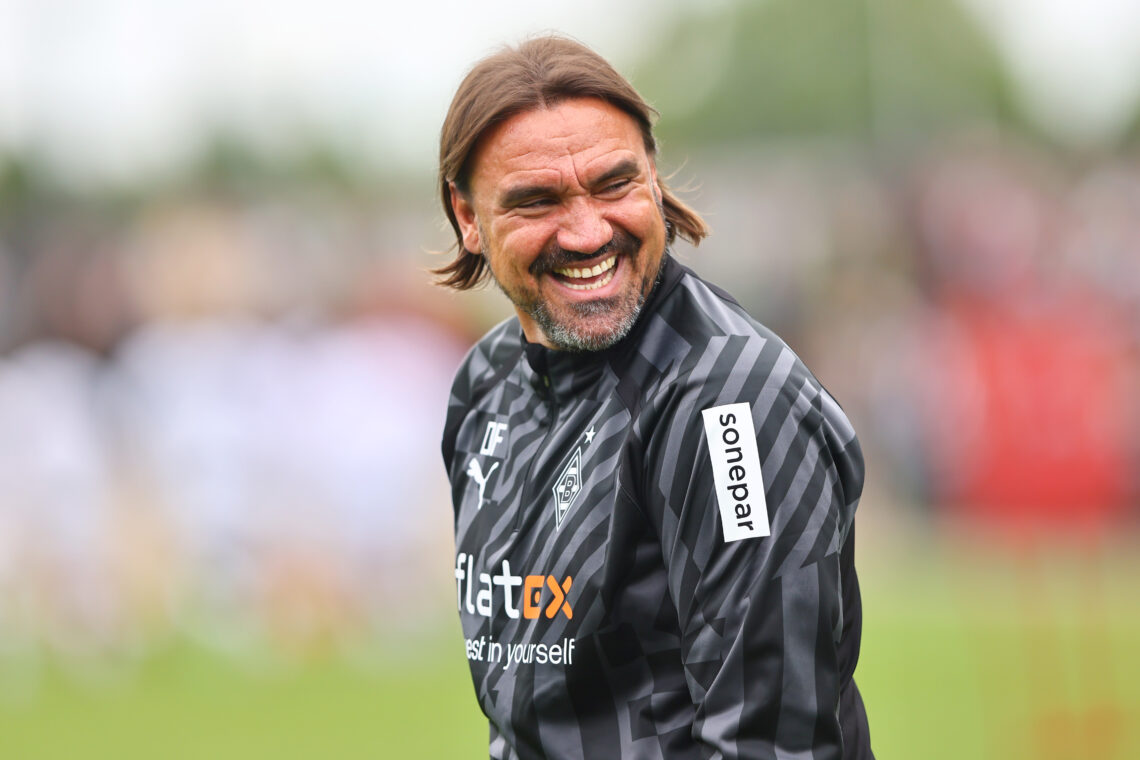


Daniel Farke could be forced into a tactical rethink at Leeds across the next few weeks.
Sean Longstaff is expected to miss six weeks – while his fellow midfielder Anton Stach may miss the next two games due to a concussion suffered against Aston Villa.
Losing two influential midfielders has sparked a discussion at Leeds as to whether Daniel Farke should now look to pack his defence instead by using a five-man backline.
The last time the German did such a thing, it raised some interesting results.
Daniel Farke has proved he can achieve results with a five-man defence
The 49-year-old has never implemented this tactic at Leeds, but he did utilise it in his final game in charge of Borussia Monchengladbach.
That Stuart Dallas masterclass as Leeds United shocked everyone to beat Man City 2-1 with 10 men
Farke deployed a 3-4-2-1 formation against Augsburg back in May 2023 in the Bundesliga, a system involving wing-backs who pushed forward when Borussia Monchengladbach attacked, and tucked in as traditional full-backs when defending to make a five-man defence.
The shape saw Borussia Monchengladbach record a 2-0 win and finish tenth in the Bundesliga.
In Farke’s penultimate match in charge of Borussia Monchengladbach, he used a similar system, opting for a 3-5-2 against Bayer Leverkusen.
A 2-2 draw followed, a fine result considering Xabi Alonso then went on to win the Bundesliga and DFB-Pokal double with Bayer Leverkusen the following season.
Despite having some success with a five-man backline in his final two games with Borussia Monchengladbach, Farke is yet to use such a formation at Leeds for whatever reason.
Leeds United have the tools to make five at the back work
Farke would be wise to deploy a five-man defence against Manchester City given the injuries to Longstaff and Stach, as well as the vast attacking talent Pep Guardiola can call upon.
In our view, Leeds have the players to make this setup work.
Gabriel Gudmundsson has actually played on the left of attack more than he has been a traditional left-back throughout his career, so the Swede is capable of being an effective presence down that flank with his technical quality.
| Position | Games | Goals | Assists |
|---|---|---|---|
| Left-Back | 84 | 2 | 5 |
| Left Wing-Back | 70 | 8 | 6 |
| Left Winger | 24 | 4 | 4 |
| Right Wing-Back | 17 | 8 | 2 |
| Striker | 16 | 3 | 1 |
| Right Winger | 9 | 2 | 0 |
| Right-Back | 2 | 0 | 0 |
| Attacking Midfield | 1 | 0 | 0 |
| Central Midfield | 1 | 0 | 0 |
| Centre-Back | 1 | 0 | 0 |
On the other side, Dan James would make a dangerous option at right wing-back with his electric speed.
In the centre of defence, Farke can also solve his dilemma of whether to select Jaka Bijol or Pascal Struijk to partner Joe Rodon by naming all three.
Rodon particularly shone when it came to passing for Wales during FIFA World Cup qualifying – no player recorded more successful passes – so the Welshman could thrive in the middle of Bijol and Struijk in a role where he can step slightly further forward into midfield when Leeds are on the attack.
Dominic Calvert-Lewin also tends to run the channels and stretch defences, which could help to cover the lack of natural wingers in this system.
With Leeds on a run of six defeats in seven Premier League games and now sitting 18th in the table, Farke has little to lose and must test this formation out.
Receive a digest of our best Leeds content each week direct to your mailbox