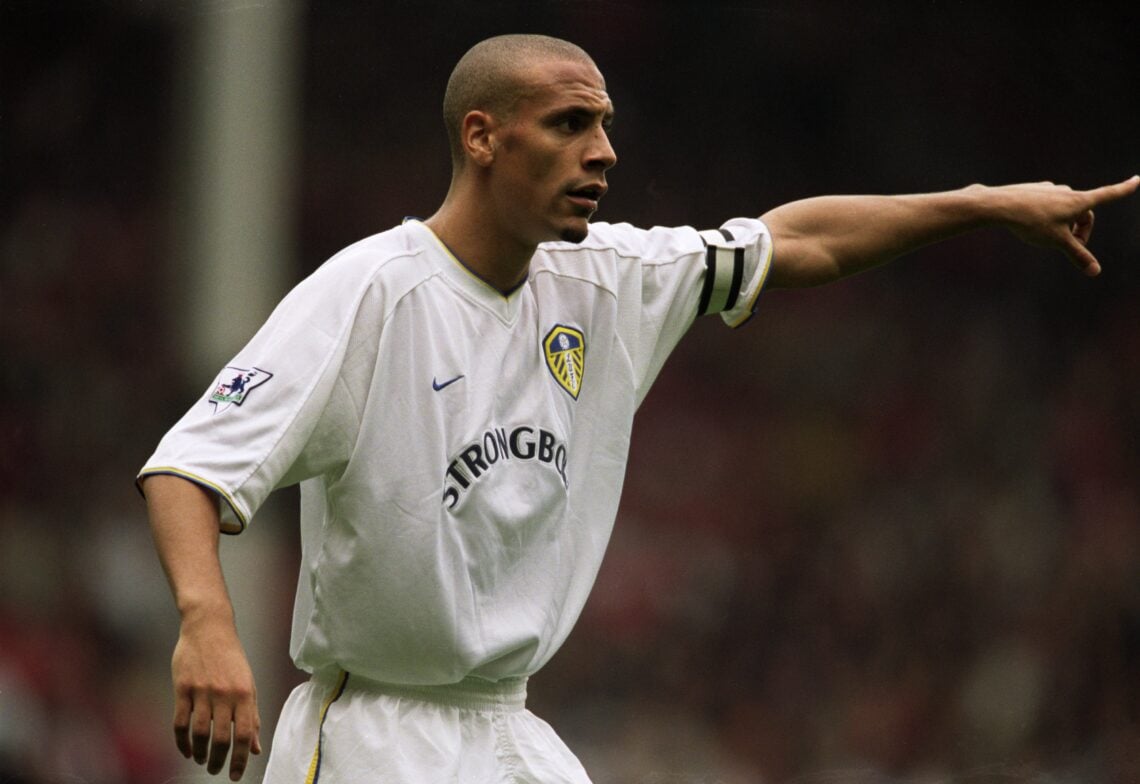


Leeds United history has been completely rewritten by Manchester City’s blockbuster signing of Elliot Anderson from Nottingham Forest for an incredible £116million.
On paper, this astronomical outlay establishes the England international as the third-most expensive signing in the history of English football, trailing behind only the records set by Alexander Isak and Florian Wirtz.
However, looking strictly at unadjusted figures completely ignores the massive 3,500 per cent revenue explosion that has completely transformed the spending capacity of Premier League clubs over the last three decades.
To fix this distortion, a fascinating economic model developed by football finance expert Kieran Maguire and professor Jason Laws for Sky Sports has recalculated historic fees against actual modern purchasing power.
And from an Elland Road perspective, the adjusted reality completely blows Manchester City’s current multi-million-pound deal directly out of the water.
Have YOU forgiven Rio Ferdinand for his move to Manchester United? 🤔
The controversial 2002 transfer is clearly still on HIS mind… 🧠
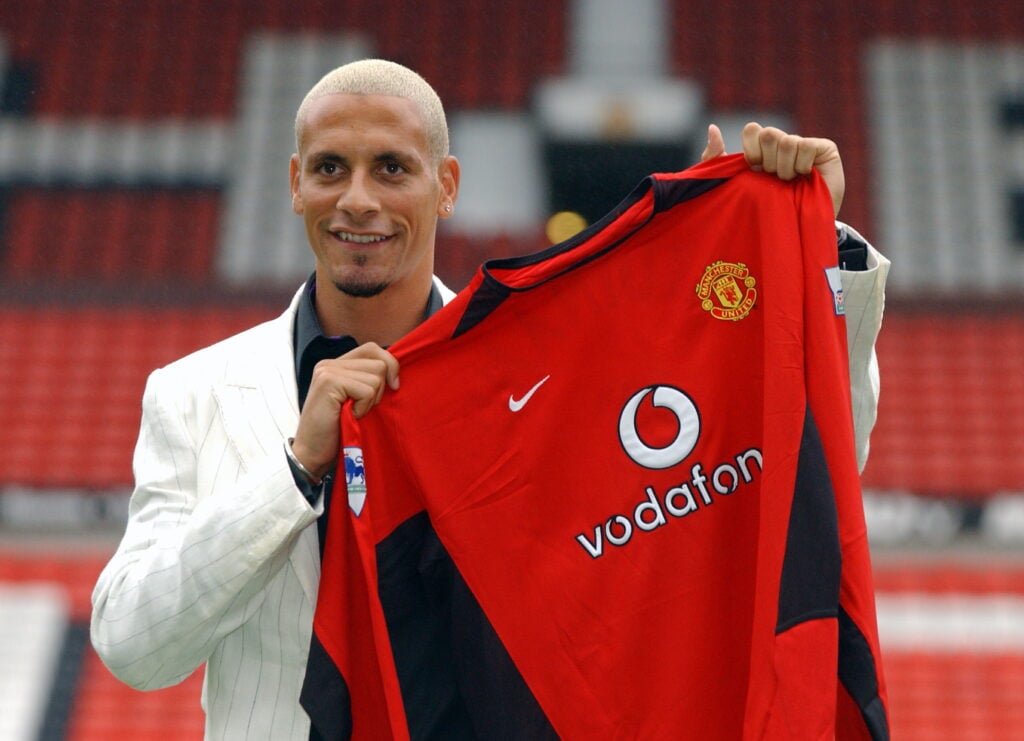
Rio Ferdinand to Manchester United ranks third in Laws-Maguire index
While Anderson’s £116m switch looks visually superior, the index proves that relative to the financial ecosystem of the modern era, the Manchester City recruit is actually only the 31st-most expensive addition in English football.
Instead, it is the legendary business conducted by Leeds United at the turn of the millennium that populates the top tier of the list.
When Manchester United completed their highly controversial, deeply agonising £33m raid on West Yorkshire in the summer of 2002 to claim Ferdinand’s signature, it felt like an immense, market-altering payout.
| Transfer | Original Fee Paid | Laws-Maguire Adjusted Fee |
| 1. Alan Shearer (Blackburn Rovers to Newcastle United – 1996) | £15million | £237million |
| 2. Juan Sebastian Veron (Lazio to Manchester United – 2001) | £28million | £199million |
| 3. Rio Ferdinand (Leeds United to Manchester United – 2002) | £33million | £179million |
The transfer saw him become the most expensive British footballer ever at the time – a record now held by Anderson following his move to Manchester City.
Fast-forward to today’s revenue environment, and that exact piece of business ranks third all-time in the history of English football.
Adjusted to the buying capacity of contemporary elite clubs, Ferdinand’s move to Old Trafford equates to a jaw-dropping £179m today.
That puts the iconic defender ahead of modern heavyweights like Jack Grealish, Moises Caicedo and Enzo Fernandez, and sits a full £63m higher than what City just allocated for Anderson.
Is there anything more pleasing than Rio Ferdinand’s tears?
Leeds beat Man United at Old Trafford for the first time since 1981.
Leeds United features twice in top 15 of adjusted fees
What makes this financial retrospective even more staggering is that Ferdinand actually features in the top 15 twice.
Before his exit to Manchester, Leeds United’s initial masterstroke to bring a young Ferdinand away from West Ham United for £18m in November 2000 broke the British transfer record.
When weighed against the turnover index of today, Peter Risdale’s initial incoming investment evaluates to a massive £140m.
Combined, the transaction history involving Ferdinand shows that an incredible £319m in modern power index value shifted through the Elland Road accounts in the space of two years.
While the club’s current leadership group, under the 49ers Enterprises and Red Bull, operates within strict financial sustainability guidelines, this new research serves as a reminder that Leeds United were once responsible for generating a level of market gravity that today’s modern state-backed heavyweights are still trying to catch up to.
Receive a digest of our best Leeds content each week direct to your mailbox