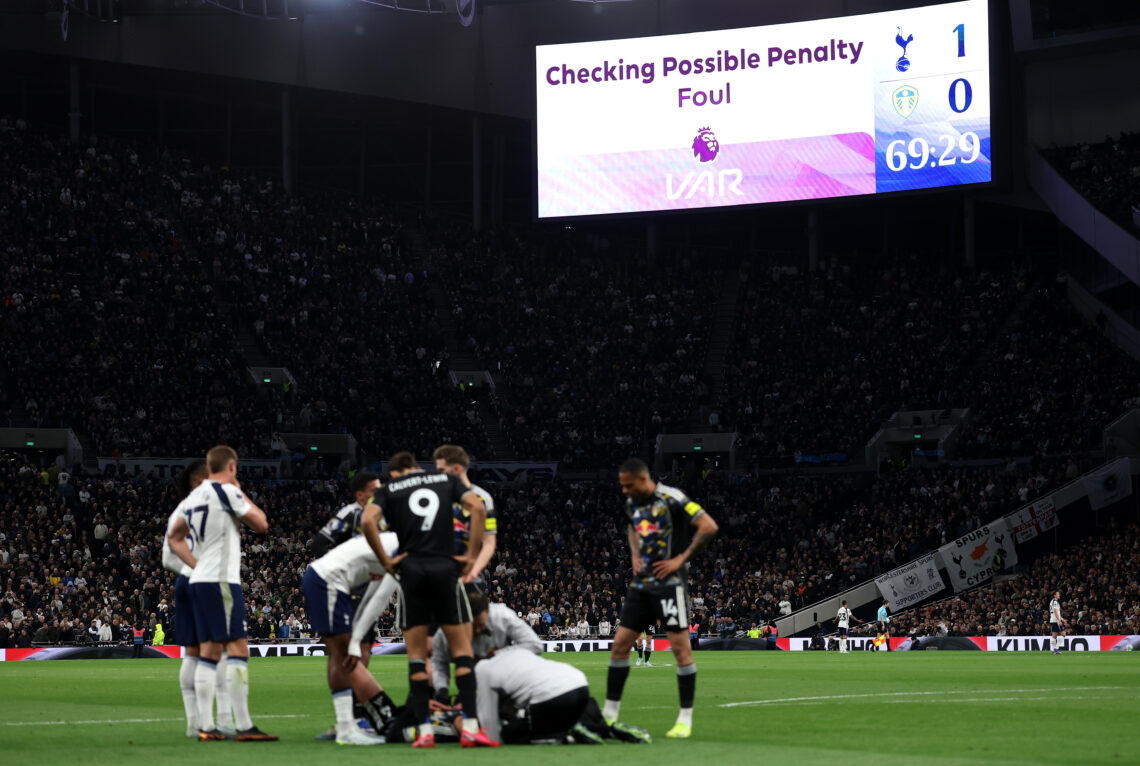


The image Leeds United posted of Ethan Ampadu after their draw with Tottenham left very little room for debate over the penalty decision that changed the game.
VAR was right to intervene, and the evidence was sitting clearly across the midfielder’s forehead by full-time. Tottenham had looked on course for victory after Mathys Tel opened the scoring.
The key moment arrived in the second half when Tel attempted an overhead clearance inside his own penalty area as Ampadu rushed in to challenge for the ball.
| Position | Team | Played MP | Won W | Drawn D | Lost L | For GF | Against GA | Diff GD | Points Pts |
| 1 |  ArsenalArsenal ArsenalArsenal | 36 | 24 | 7 | 5 | 68 | 26 | 42 | 79 |
| 2 |  Manchester CityManchester City Manchester CityManchester City | 35 | 22 | 8 | 5 | 72 | 32 | 40 | 74 |
| 3 |  Manchester UnitedManchester United Manchester UnitedManchester United | 36 | 18 | 11 | 7 | 63 | 48 | 15 | 65 |
| 4 |  LiverpoolLiverpool LiverpoolLiverpool | 36 | 17 | 8 | 11 | 60 | 48 | 12 | 59 |
| 5 |  Aston VillaAston Villa Aston VillaAston Villa | 36 | 17 | 8 | 11 | 50 | 46 | 4 | 59 |
| 6 |  BournemouthBournemouth BournemouthBournemouth | 36 | 13 | 16 | 7 | 56 | 52 | 4 | 55 |
| 7 |  BrightonBrighton BrightonBrighton | 36 | 14 | 11 | 11 | 52 | 42 | 10 | 53 |
| 8 |  BrentfordBrentford BrentfordBrentford | 36 | 14 | 9 | 13 | 52 | 49 | 3 | 51 |
| 9 |  ChelseaChelsea ChelseaChelsea | 36 | 13 | 10 | 13 | 55 | 49 | 6 | 49 |
| 10 |  EvertonEverton EvertonEverton | 36 | 13 | 10 | 13 | 46 | 46 | 0 | 49 |
| 11 |  FulhamFulham FulhamFulham | 36 | 14 | 6 | 16 | 44 | 50 | -6 | 48 |
| 12 |  SunderlandSunderland SunderlandSunderland | 36 | 12 | 12 | 12 | 37 | 46 | -9 | 48 |
| 13 |  NewcastleNewcastle NewcastleNewcastle | 36 | 13 | 7 | 16 | 50 | 52 | -2 | 46 |
| 14 |  Crystal PalaceCrystal Palace Crystal PalaceCrystal Palace | 35 | 11 | 11 | 13 | 38 | 44 | -6 | 44 |
| 15 |  Nottingham ForestNottingham Forest Nottingham ForestNottingham Forest | 36 | 11 | 10 | 15 | 45 | 47 | -2 | 43 |
| 16 |  LeedsLeeds LeedsLeeds | 35 | 10 | 13 | 12 | 47 | 52 | -5 | 43 |
| 17 |  TottenhamTottenham TottenhamTottenham | 35 | 9 | 10 | 16 | 45 | 54 | -9 | 37 |
| 18 |  West HamWest Ham West HamWest Ham | 36 | 9 | 9 | 18 | 42 | 62 | -20 | 36 |
| 19 |  BurnleyBurnley BurnleyBurnley | 36 | 4 | 9 | 23 | 37 | 73 | -36 | 21 |
| 20 |  WolvesWolves WolvesWolves | 36 | 3 | 9 | 24 | 25 | 66 | -41 | 18 |
Tel’s boot clearly caught Ethan Ampadu on the head, yet referee Jarred Gillett initially allowed play to continue despite the Leeds captain going down with a head injury following the collision.
That decision looked questionable immediately because dangerous contact to the head is difficult to ignore, particularly when the challenge comes from a raised boot inside the penalty area.
VAR corrected a decision that looked wrong in real time
The original on-field call only survived for a matter of moments before VAR intervened and instructed Gillett to review the incident.
Once the replay was shown from multiple angles, the outcome became difficult to dispute because Tel’s foot made clear contact with Ampadu before the Leeds midfielder could attack the ball.
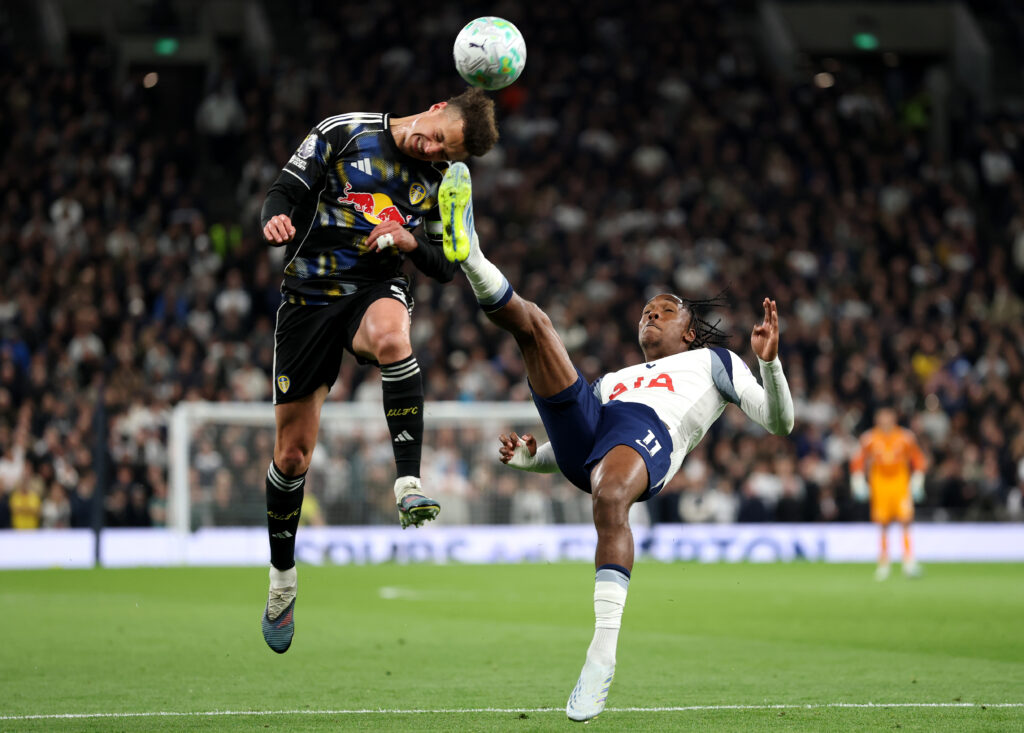
Intent was never the issue in the challenge because the danger of the action itself was enough to justify punishment. High boots inside penalty areas are regularly penalised when endangering an opponent.
Dominic Calvert-Lewin scored the resulting penalty emphatically, firing his effort into the top corner to bring Leeds level. A brilliant penalty, that saw Calvert-Lewin take his tally to 13 Premier League goals.
The Leeds image became the strongest evidence of all
Any remaining argument over the decision weakened even further once Leeds later posted an image of Ampadu following the match.
Clearly, VAR was right to award a penalty 🤕
The photograph showed a visible red mark on his forehead, directly where Tel’s boot had connected during the incident.
That image mattered because it reinforced what the replay had already shown. Contact was not minimal, accidental brushing or invented theatrics from the Leeds midfielder.
It instead highlighted the force and height of the challenge, making the referee’s original decision to wave play on look even weaker after the event.
Tottenham complaints carry little weight after Ampadu image
There will always be frustration from the side that concedes a decisive penalty, but this incident never looked like an example of VAR manufacturing controversy from limited evidence.
The replay footage already strongly supported the overturn, while Ampadu’s visible injury only strengthened the case that Leeds had been denied a clear foul in real time.
GIVE DANIEL FARKE A NEW DEAL, NOW!
Leeds United are mathematically safe from relegation.

If there was genuine criticism to make from the sequence, it was probably directed at the fact play initially continued despite clear contact to a player’s head. Referees are usually expected to react more cautiously in those situations.
VAR ultimately fulfilled the role it was introduced for by correcting an obvious missed decision. The image Leeds released after full-time simply made that conclusion even harder to argue against.
Receive a digest of our best Leeds content each week direct to your mailbox